On this page
18K = 18 parts gold out of 24 = 75% pure
Karat measures purity in 24ths. 18K is 18 parts gold and 6 parts alloy — typically copper, silver, and palladium depending on whether the piece is yellow, white, or rose gold. 18 ÷ 24 = 75%. The European decimal stamp '750' means exactly the same thing — both refer to 75% gold content. European, Italian, and Asian manufacturers use 750; American manufacturers typically use 18K. Same metal, same per-gram value, just different conventions for marking it.
Where 18K shows up: designer jewelry, engagement settings, European imports
18K is the global standard for high-end jewelry — Cartier, Tiffany, Van Cleef & Arpels, Bvlgari, David Webb, Buccellati, and most established luxury houses work primarily in 18K. It's also the standard for European wedding bands and Italian gold chains (which is why so many European pieces are stamped 750 rather than 18K). Modern engagement settings in the US increasingly use 18K white, rose, or yellow gold for the balance of richness and durability — softer than 14K so it polishes to a deeper color, but harder than 22K so it survives daily wear.
The math: weight × 75% × today's spot price
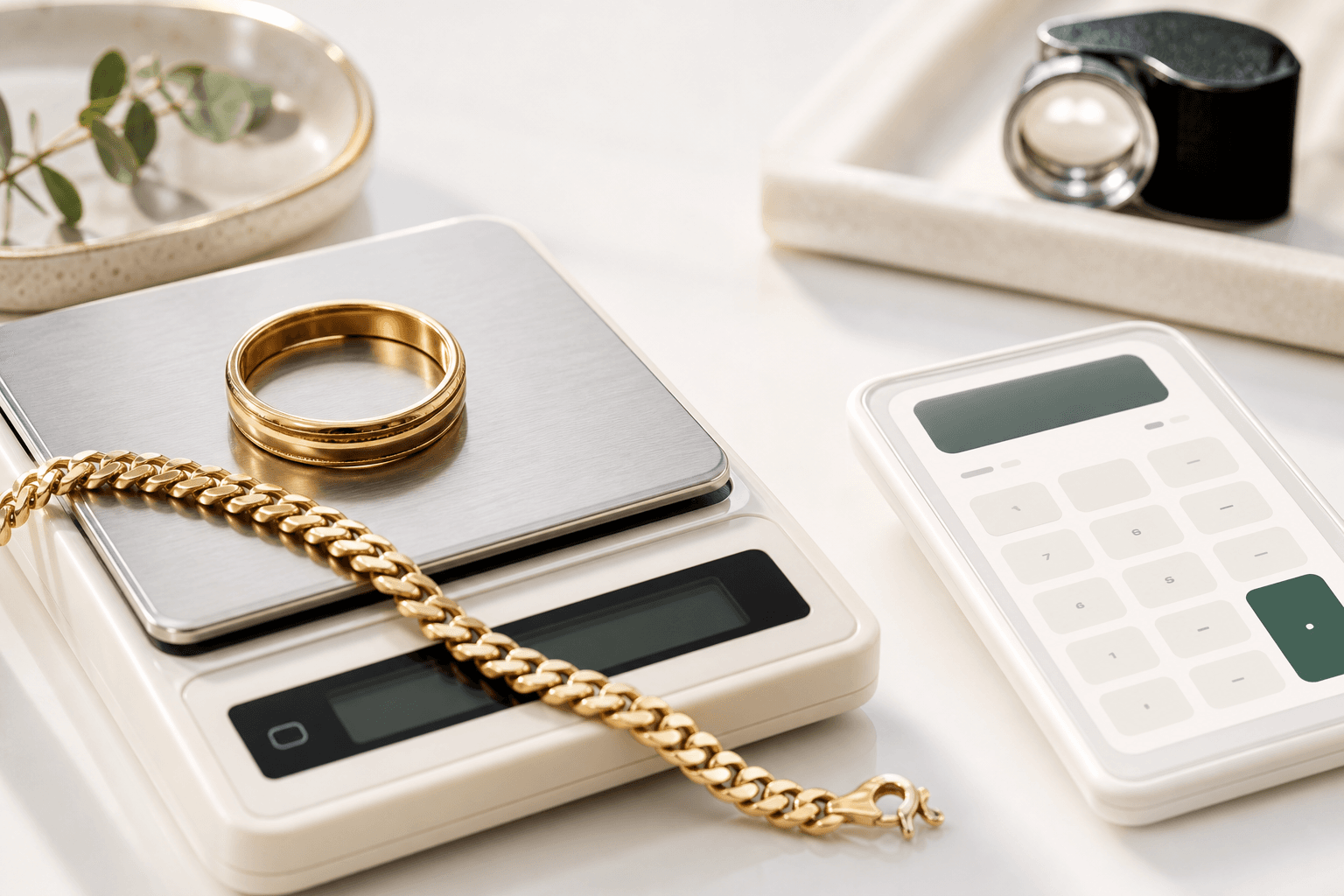
Here's how every honest counter calculates 18K value. Troy-ounce gold spot price ÷ 31.1035 = per-gram price for pure gold. Multiply by 0.75 = per-gram price for 18K. Multiply by verified weight = melt value. Worked example: at $2,400/oz gold, a 5g 18K engagement-ring setting (no stone) is worth 5 × ($2,400 ÷ 31.1035) × 0.75 ≈ $289 in melt content. The actual offer on scrap runs 70–80% of that — typically $202–$232. If the same setting is a signed Cartier or Tiffany piece in clean condition, the offer can run 2–5× the scrap melt because we pay for the piece, not just the metal.
Why designer 18K usually outvalues scrap math
A signed Cartier Love bracelet contains roughly $4,000–$6,000 in gold melt value at current spot — but the same bracelet sells secondhand for $4,500–$7,500 depending on size, color, and condition. We don't melt those. They go in the showcase. Same logic applies to Tiffany T pieces, Van Cleef Alhambra, Bvlgari B.zero1, and most established luxury 18K. Bring the piece and any boxes, papers, or original receipts — they boost the resale price and your offer. If you have a generic 18K chain with no signature, the math is straightforward melt-based, and we explain that clearly on the counter.
How Much Is 18K Gold Worth in San Diego Today? FAQ
How can I tell if a piece is 18K?
Look for '18K' or '750' stamped somewhere small — usually inside a ring band, on the clasp of a chain, or on the back of a pendant. European pieces almost always use 750; American pieces typically use 18K. If the stamp is worn off or missing, bring it in — an acid or XRF test confirms purity in seconds.
Why are engagement settings often 18K instead of 14K?
Two reasons. 18K's higher gold content polishes to a richer color (especially in yellow and rose), and the slightly softer metal accepts intricate filigree and pavé work that 14K can crack during setting. For daily-wear durability, 14K is harder — but most designer houses prioritize the visual and craftsmanship of 18K.
Will you pay more for a signed Cartier or Tiffany 18K piece than for scrap weight?
Almost always. A signed Cartier Love bracelet in good condition resells for 2–5× its scrap melt value. We pay accordingly. Bring the box, papers, and any service receipts if you have them — full sets typically boost the offer 15–25% over the watch/jewelry alone.
What's the difference between 750 and 18K stamps?
Nothing — they mean the same thing. 750 is the decimal equivalent (75%) and 18K is the karat equivalent (18/24). European, Italian, Spanish, and most Asian manufacturers use 750. American manufacturers use 18K. Per-gram value is identical.
Do you buy 18K white gold differently from yellow or rose?
No — the gold content is the same 75% regardless of color. The alloy varies (palladium and silver for white; copper for rose), but those alloys don't change the gold-per-gram math. We test and pay for the gold content. The color affects resale value only if the piece goes back in the showcase whole.