On this page
Run a home estimate first — even a rough one
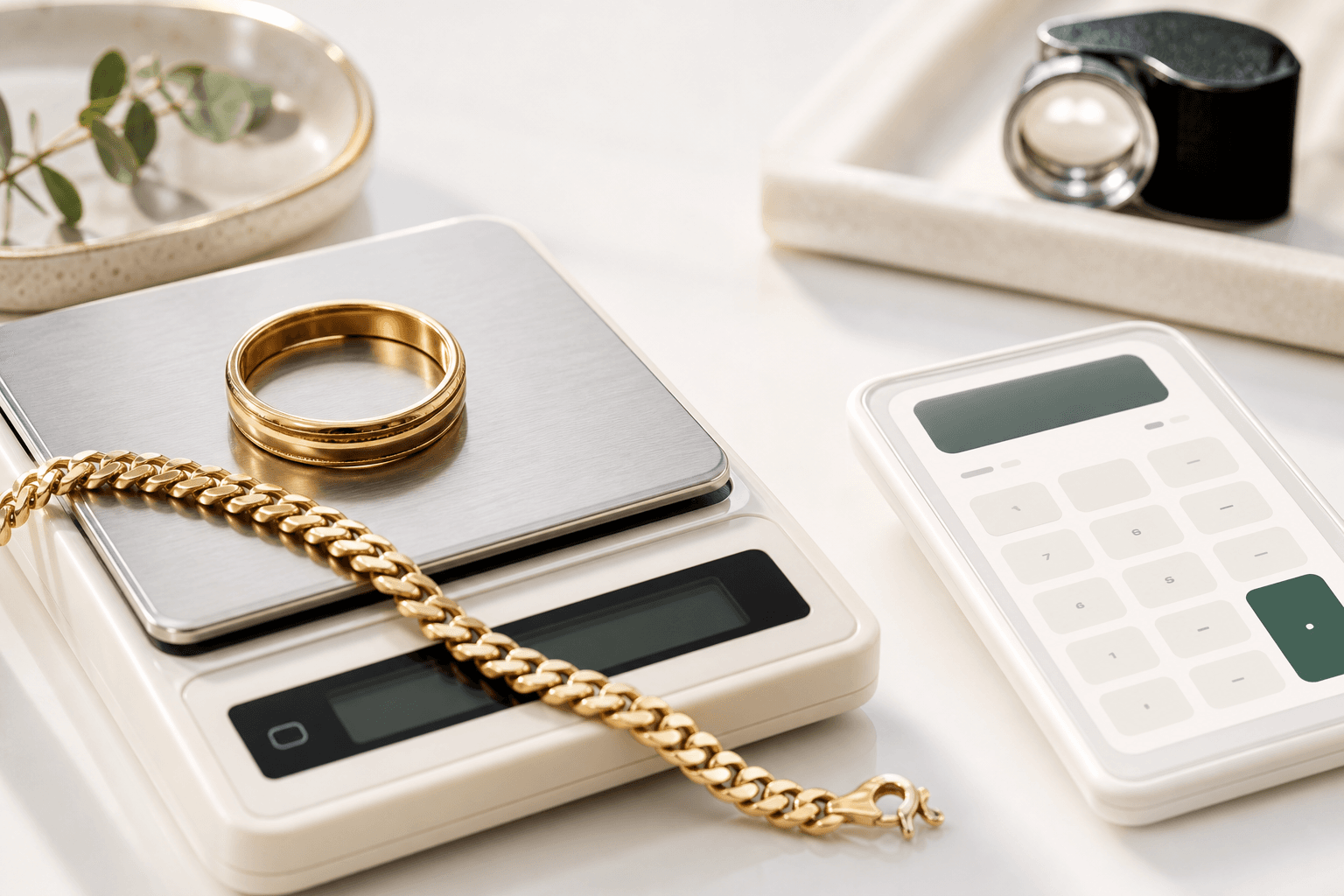
Before you walk into any shop, weigh your piece on a kitchen scale (most are accurate to within a gram) and find the karat stamp if there is one. Plug those into our calculator above and you'll have a ballpark melt value within a few dollars. That number is your anchor — without it, any offer sounds plausible. With it, you instantly know whether a counter is in the honest 70–80%-of-melt range or quietly shorting you 30%. The calculator isn't a guaranteed offer; it's the question you bring to the counter.
What an honest buyer will show you on the counter
A transparent shop walks you through four numbers, in order: (1) your piece's weight on a calibrated 0.01g jeweler's scale; (2) the purity result from an acid or XRF test; (3) today's gold spot price per gram (it's public — Kitco, Gold API, anywhere); (4) the percentage of melt the offer represents. If any of those four are missing, ask. If a shop won't show you, you're not at the right shop. Our counter walks you through all four before naming a number — that's our standard, not a favor.
Where most people get lowballed
Mail-in services, mall kiosks, and pawn shops all have business models that work against transparent math. Mail-ins quote a number sight-unseen, then revise after they have your gold; you ship back or accept their revised offer. Mall kiosks pay rent on prime real estate by paying you less. Pawn shops are loan businesses first — selling gold is a side line, and the offer reflects that. None of these are scams, but none are built to give you 80% of melt either. A family-run jewelry shop with a fixed address and a thirty-year reputation is structurally aligned with paying fairly — they need the next walk-in and the referral that comes after.
The case for walking into a Gaslamp Quarter counter
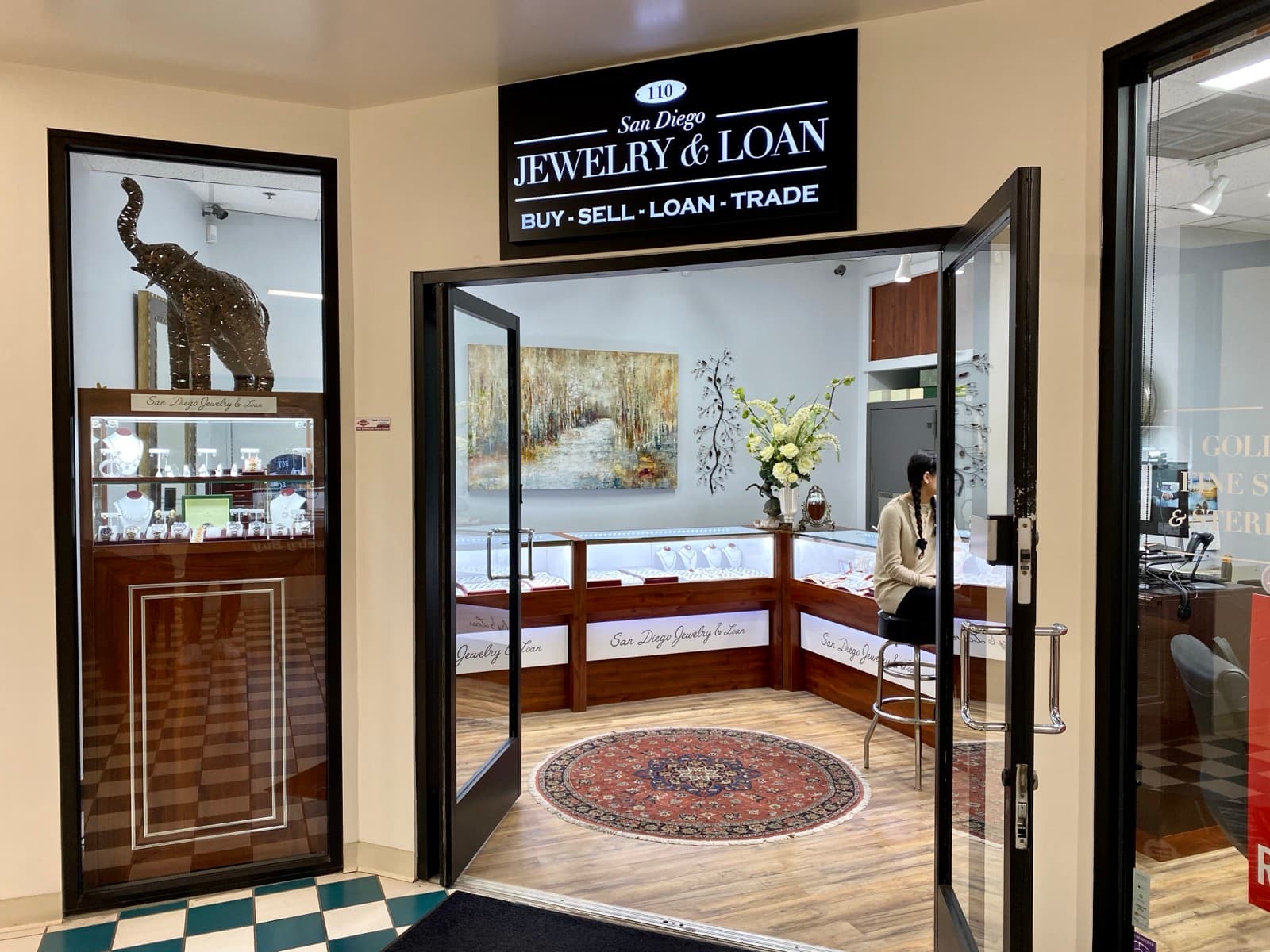
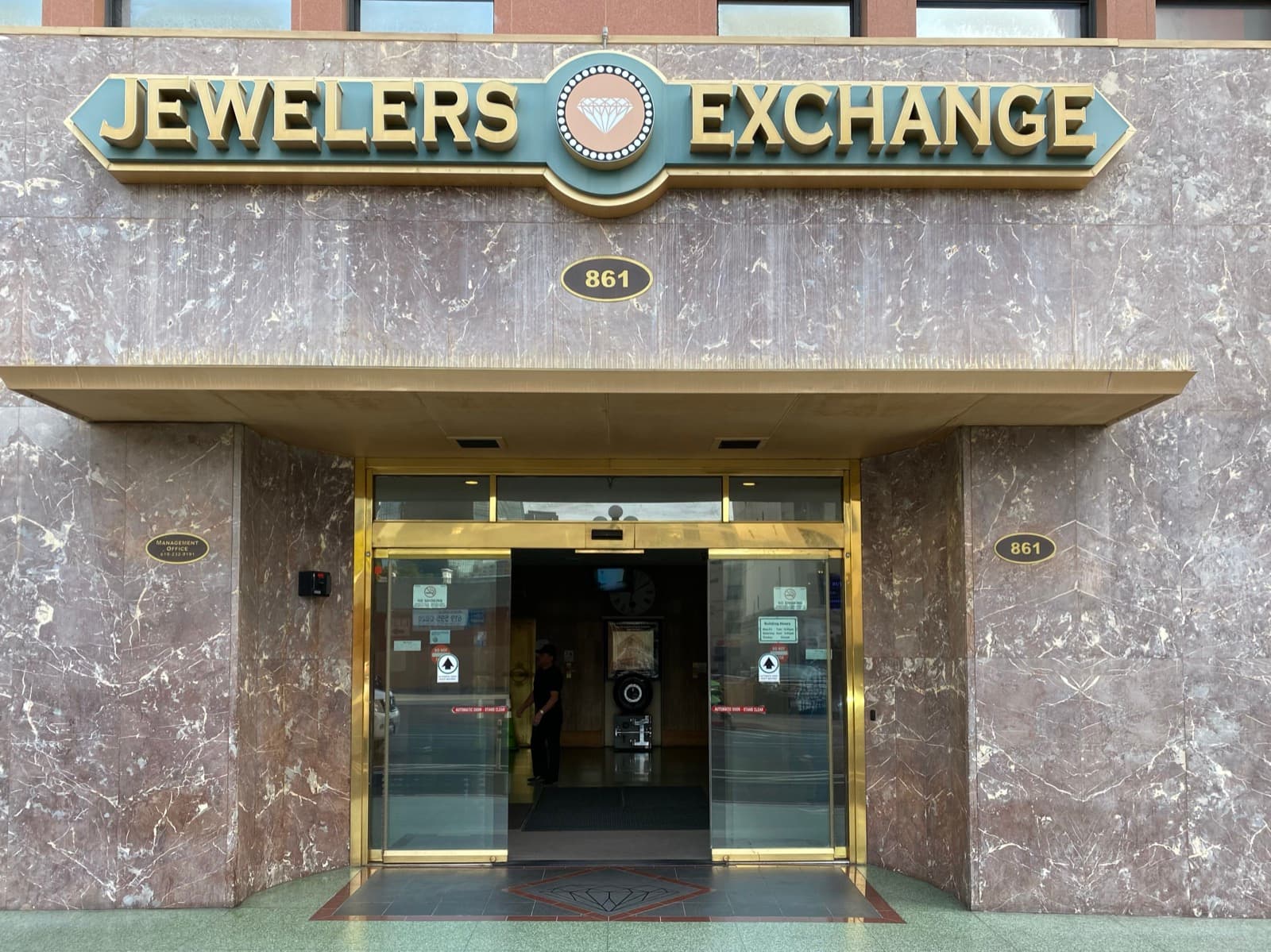
We've been at 861 Sixth Avenue inside the Jewelers Exchange since 1992. Same family, same location, same math-on-the-counter approach. Show up with your home estimate in hand, watch us re-weigh and test, and see the math against today's spot price. If our offer doesn't line up with what your homework told you to expect, we'll explain why. If you decide to walk, no pressure, no follow-up call, and your gold goes home with you. That's the whole pitch: you walk in informed, not lowballed across five shops.
Where to Sell Gold in San Diego Without Guessing FAQ
Should I get multiple offers before selling gold?
If you've done the home estimate first, usually one good counter is enough. The five-shop tour helps when you're flying blind — but if your homework says your piece is worth ~$1,800 of melt, and our counter offers $1,440 (80%) with the math written out, there's nothing four more shops will teach you. The point of multiple offers is to triangulate the real number; the calculator + a transparent counter triangulates it in one visit.
Is the highest offer always the best one?
Not necessarily. A high quote that gets revised after testing isn't real. A cash-mail-in service that quotes high and then 'discovers' your piece is lower karat isn't real either. The best offer is the one a buyer will commit to in writing on the counter, with the math shown. If two transparent offers are close, take the one with a track record — a fixed address, a written license, decades in business — over a higher number from somewhere that might not exist next month.
What questions should I ask a gold buyer in San Diego?
Four: (1) What scale will you use, and what's its precision? (2) How will you test purity — acid or XRF? (3) What spot price are you using today? (4) What percentage of melt is your offer? Any honest counter answers all four in under a minute. If a shop gets vague on any of them, you've learned what you needed to learn.
How much should I expect for my gold in San Diego today?
For scrap (broken jewelry, mismatched pieces, generic chains), expect 70–80% of today's melt value. For resaleable pieces (designer-signed jewelry, vintage in good condition, anything we'd put back in the showcase), often more — because we're paying for the piece, not just the metal. Run the calculator to see today's melt number for your specific weight and karat, then bring it in.