On this page
22K = 22 parts gold out of 24 = 91.6% pure
Karat measures purity in 24ths. 22K is 22 parts gold and 2 parts alloy — usually copper or silver, sometimes both. 22 ÷ 24 ≈ 91.6%. The decimal stamp '916' means exactly the same thing. Because there's so little alloy, 22K is significantly softer than 14K or 18K — it bends and scratches more easily — which is why it's typically used for jewelry meant to be worn occasionally (wedding sets, special-occasion pieces) rather than daily-wear chains. Indian gold often carries the 916 stamp; some pieces are marked '22ct' (carat is the European spelling).
Where 22K shows up: Indian wedding gold, religious pieces, heritage jewelry
22K is the dominant karat for Indian wedding sets (necklaces, bangles, earrings, maang tikkas), Pakistani gold, Middle Eastern jewelry, and Southeast Asian heritage pieces from Thailand, Indonesia, and Vietnam. Religious medallions — Hindu deities, Sikh khanda, Islamic calligraphy pieces, Christian crosses from Eastern European traditions — are commonly 22K. Many South Asian and Middle Eastern families treat 22K gold as a generational financial asset, passed down through weddings and stored as inflation-proof savings. When those collections come to the counter, the conversation deserves respect.
The math: weight × 91.6% × today's spot price
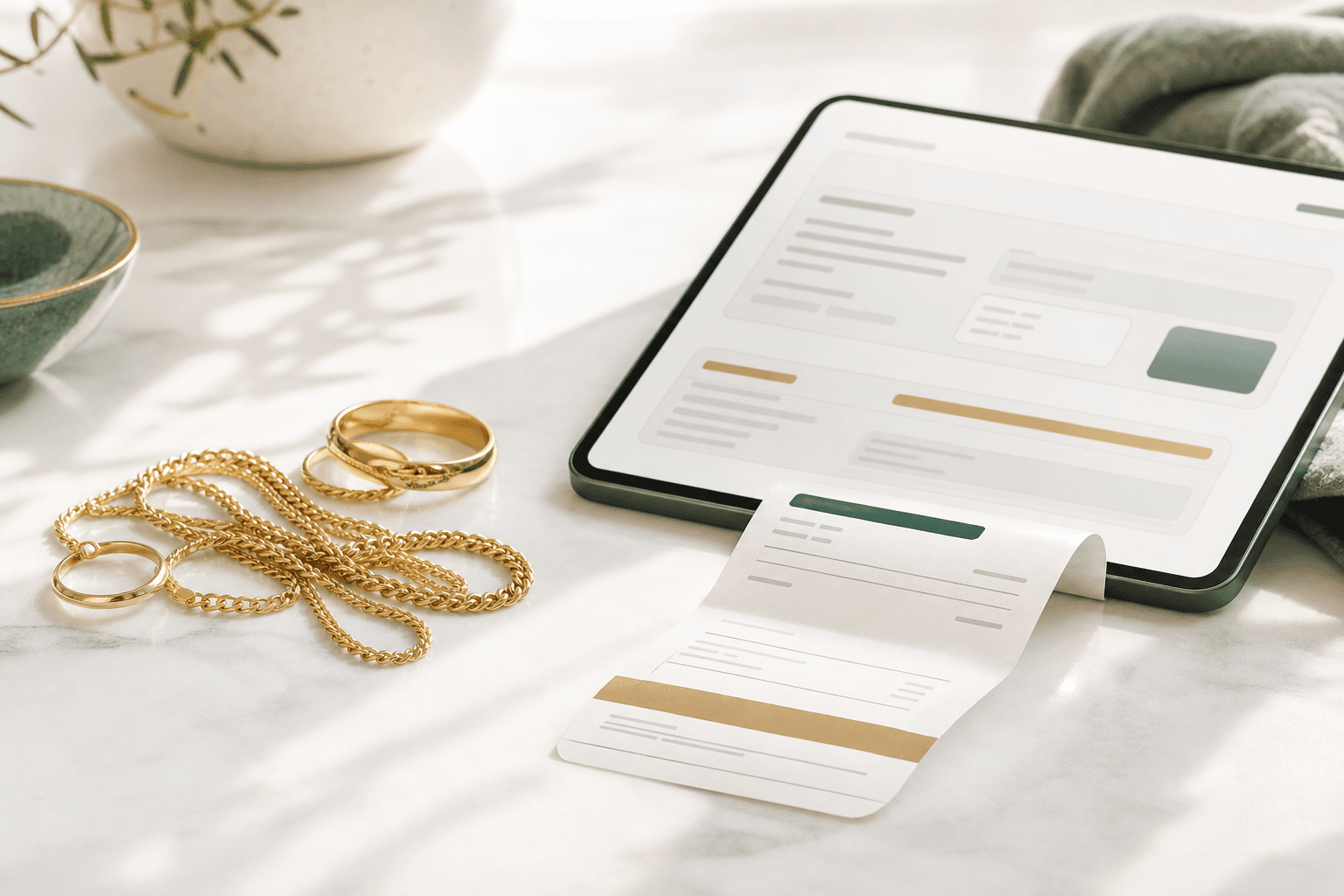
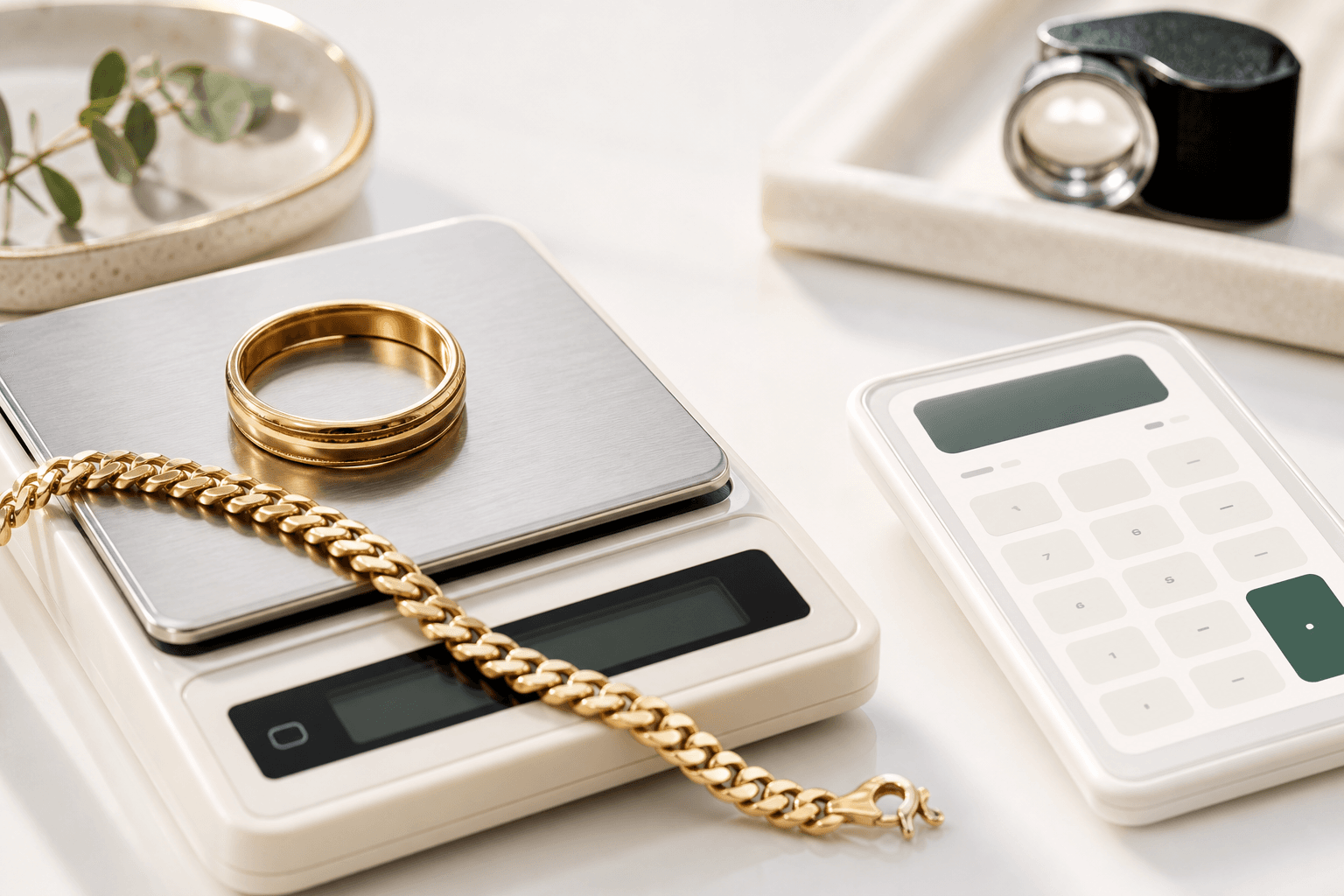
Troy-ounce gold spot price ÷ 31.1035 = per-gram price for pure gold. Multiply by 0.916 = per-gram price for 22K. Multiply by verified weight = melt value. Worked example: at $2,400/oz gold, a 30g 22K wedding bangle is worth 30 × ($2,400 ÷ 31.1035) × 0.916 ≈ $2,120 in melt content. The honest offer on scrap-grade 22K runs 70–80% of that — typically $1,484–$1,696. For signed Indian designer pieces (Tanishq, Joyalukkas, Malabar) or museum-quality religious pieces with documented provenance, we may pay above scrap melt because the piece holds resale value whole.
How we handle wedding sets, religious pieces, and heritage collections
We see a lot of South Asian families at the counter — often selling 22K gold during life transitions (divorces, downsizing, family medical needs, college tuition). The math is the math, but the conversation moves at your pace. We weigh and explain each piece individually so you understand what you're selling and what you're keeping. We pay the same per-gram rate for a 30-year-old wedding necklace as we do for a brand-new bangle — purity and weight are what we pay for. You can sell some pieces and keep others; you can take the math home and decide later; you can decline our offer with no follow-up calls. Bring it all; we'll walk through it.
How Much Is 22K Gold Worth in San Diego Today? FAQ
Where can I sell 22K Indian gold in San Diego?
Our Gaslamp Quarter counter buys 22K from every origin — Indian, Pakistani, Bangladeshi, Sri Lankan, Middle Eastern, Southeast Asian. We use today's gold spot price and the 91.6% purity factor, with maker premium for signed Tanishq, Joyalukkas, Malabar, and similar designer brands. Bring the piece; we show the math.
Will you buy religious medallions and devotional pieces?
Yes — with the respect those pieces deserve. We weigh and price by purity like any other 22K piece, but we don't rush the conversation. If a piece carries family or spiritual significance and you're uncertain, take the math home and decide later. We won't call to follow up.
Is 22K worth more than 24K?
No, per gram. 24K is 99.9% pure vs 22K's 91.6%, so 24K's melt value runs about 9% higher than 22K's at the same weight. But 22K is more common in jewelry because the small alloy content gives it enough durability to wear; pure 24K bends too easily for everyday use. 24K mostly exists as investment bullion (bars and coins), not jewelry.
Do you understand Indian wedding sets and South Asian gold conventions?
Yes. We've handled Indian wedding sets, Pakistani gold collections, Bangladeshi heritage pieces, and Sri Lankan jewelry for decades. We know which signed brands carry resale premium, which religious pieces typically stay whole vs scrap, and which traditional designs Indian buyers in the US still demand. Bring everything in one visit; we sort and explain on the counter.
What if my 22K piece has stones or pearls set in it?
We evaluate the metal and the stones separately. Many traditional Indian pieces have semiprecious stones (kundan, polki, uncut diamonds) — we can either remove them so you keep them, or include them in the offer if you want the whole piece valued. The metal math doesn't change either way.