
Guide
Guides for understanding gold, silver, platinum, and jewelry value.
Want a number for your specific item? Open the calculator

The five-shop lowball tour is a waste of your day. Here's how to walk into the right counter already knowing what your piece is worth.
Read guide
14K gold is 58.5% pure gold — the most common karat in American jewelry. Here's the math, today's per-gram value, and what an honest San Diego offer actually looks like.
Read guide10K is the lowest karat the US legally calls 'gold' — 41.7% pure. Here's the math, today's per-gram value, and what an honest San Diego offer looks like on class rings, costume chains, and budget pieces.
Read guide18K is 75% pure gold — the global standard for designer jewelry, engagement settings, and European imports. Per gram it's worth about 30% more than 14K and 80% more than 10K.
Read guide22K is 91.6% pure gold — the standard for Indian wedding jewelry, Pakistani gold, religious medallions, and Southeast Asian heritage pieces. Per gram it's worth about 1.6× more than 14K.
Read guide24K is 99.9% pure gold — bullion bars, investment coins, and rare jewelry. Per gram it tracks today's spot price almost 1:1, and we pay close to spot — different math than scrap jewelry.
Read guide
Sterling is 92.5% silver. Fine silver is 99.9%. Coin silver is 90%. Per-gram value depends on which one you have plus today's spot price — here's the math and what to expect at the counter.
Read guide
Platinum is 1.7× denser than gold but priced on its own market — sometimes above gold, sometimes below. Here's how Pt950, Pt900, and Pt850 prices differ and what an honest San Diego offer looks like.
Read guide
Premium is the markup above today's spot price you pay when buying physical gold. Here's how to ask the right questions so you don't overpay for coins, bars, or bullion.
Read guide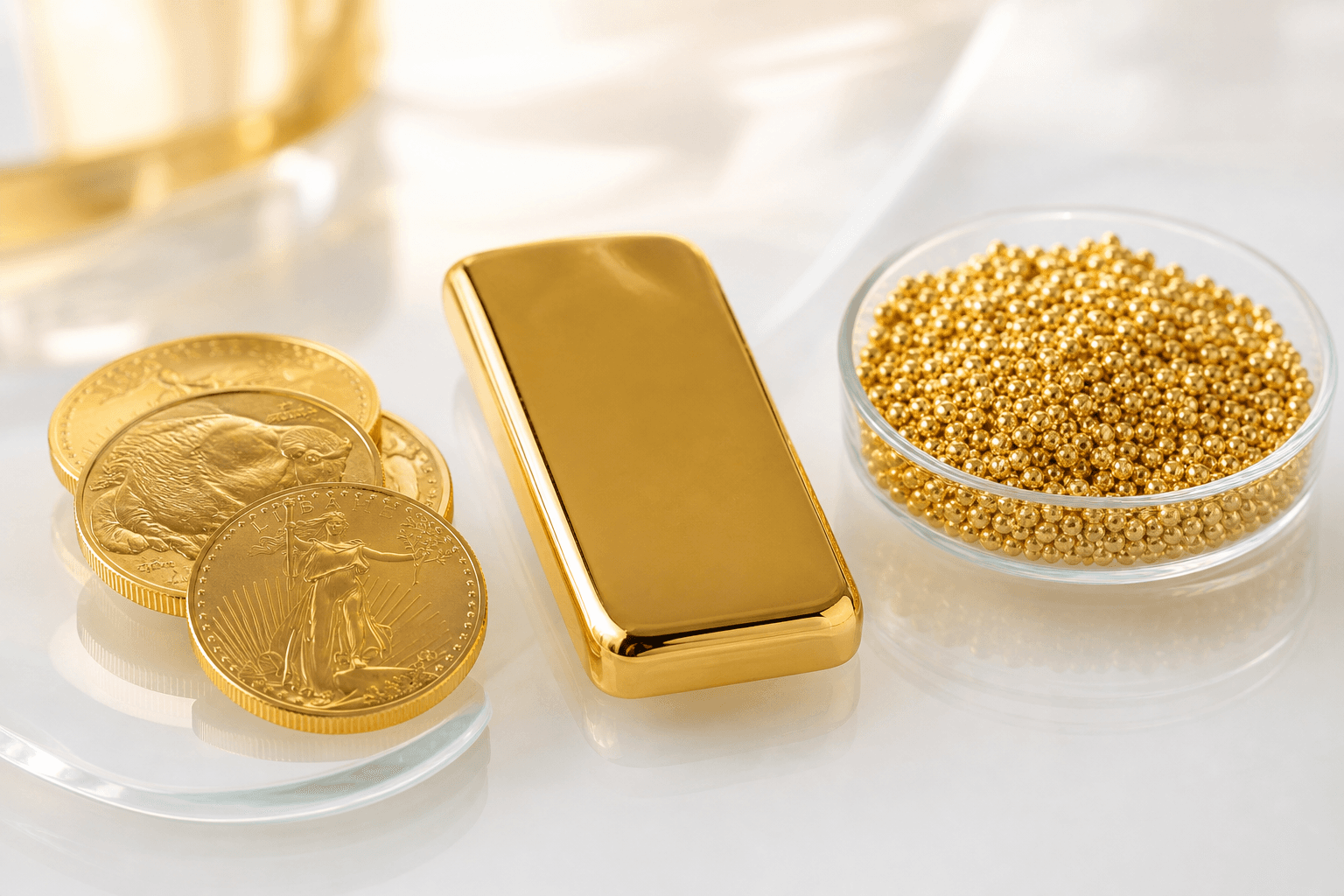
Coins are recognizable and resaleable anywhere. Bullion is cheap per gram. Casting grain is for jewelers. Here's a decision tree for picking the right form for your purpose.
Read guide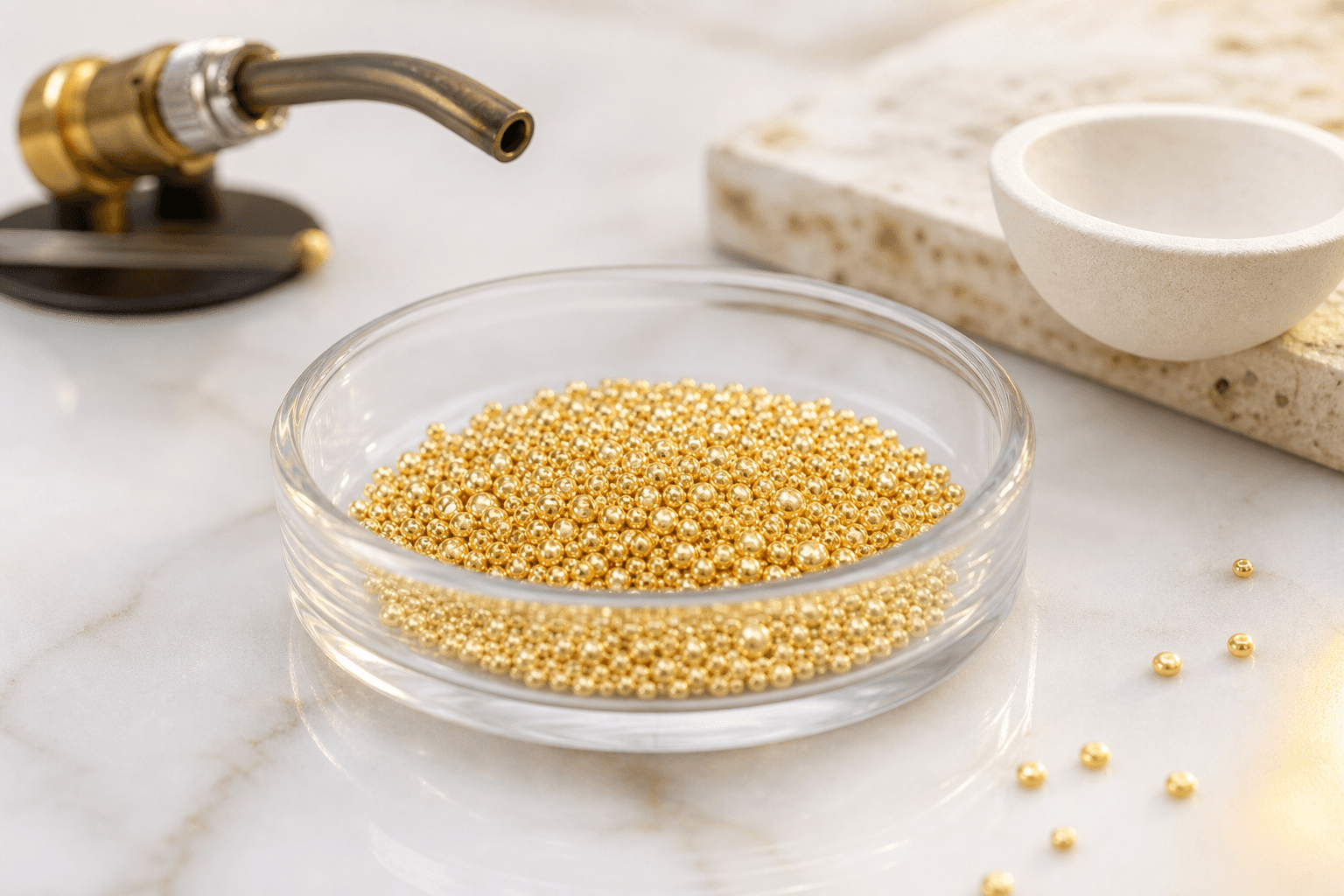
Casting grain is pelletized gold — raw jewelry-making material that's already alloyed to the karat and color you need. Here's what it is, the purities available, and who actually uses it.
Read guide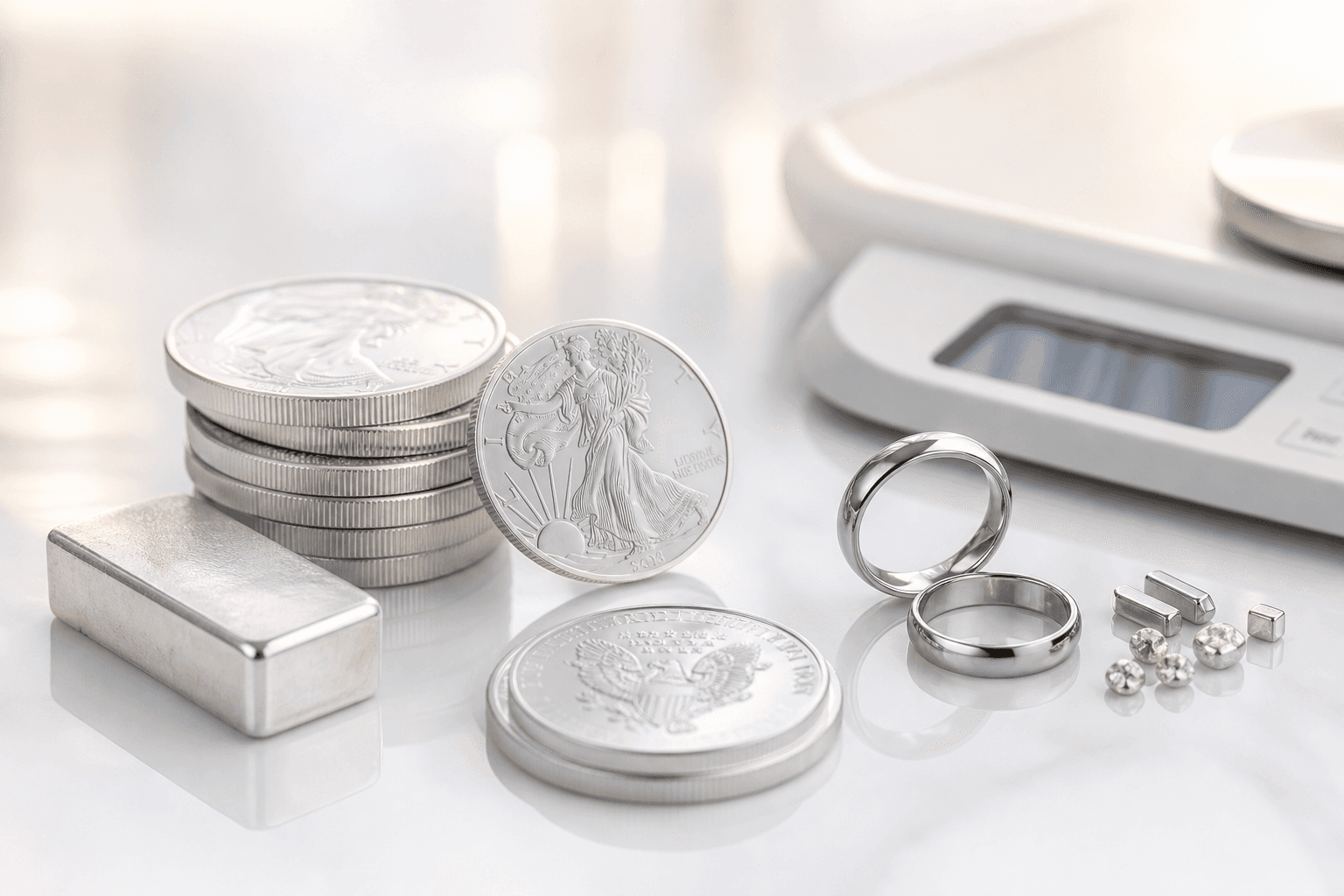
Silver and platinum each have their own markets, premium ranges, and product availability. Here's how to ask the right questions before buying.
Read guideMore quick answers
Common questions people ask before they sell.
FAQ
Guide hub questions
Is the online estimate a final offer?
No. The estimate is an educational starting point. A final payout requires verified weight, professional testing, item inspection, current market price review, and compliance with applicable laws.
Why do different buyers offer different amounts?
Different buyers operate with different margins, testing processes, resale channels, refining costs, overhead, and risk. The offer ladder helps you understand the difference between a weak offer, a general offer, and a strong sell-it-now number before you sell.
Do diamonds or stones count toward melt value?
They may add weight, but they usually do not count toward precious-metal melt value. Diamonds, pearls, enamel, watch parts, steel springs, and other non-metal parts need to be evaluated separately.
Can I trust the stamp on my jewelry?
Stamps like 14K, 18K, 585, and 750 are useful starting points, but they are not final proof. Worn, repaired, plated, or mismatched items still need professional testing.
Next step
Read, calculate, then verify.
Use the guides to understand the inputs, then run the calculator before you text us or come in for local verification.