On this page
The three purities you'll see: sterling, fine silver, coin silver
Sterling silver (.925 or 'STERLING' stamp) is 92.5% silver and 7.5% alloy (usually copper) — the standard for flatware, jewelry, hollowware, and trophy silver. Fine silver (.999 or 'FINE') is 99.9% pure — found mostly in bullion bars, modern rounds, and some art-silver pieces. Coin silver is 90% silver, the historical US coinage standard before 1965 (dimes, quarters, half dollars, and Morgan/Peace dollars from pre-1965). Each purity gets its own multiplier when we run the math, and we sort mixed lots on the counter before pricing.
Silver-plated isn't silver — we sort it on the counter
Silver-plated pieces have a thin layer (microns) of silver over a base metal like nickel or copper, and they're stamped 'EPNS' (electroplated nickel silver), 'EP' (electroplated), '90' or '100' (referring to the plating process, not purity), or sometimes unmarked. Plated isn't sellable as silver — the metal content is too low to process. We separate plated from sterling in front of you and only offer on the real silver. If you're unsure what you have, bring it all — sorting a typical drawer-bottom mix takes 10–15 minutes.
The math: weight × purity × today's silver spot price
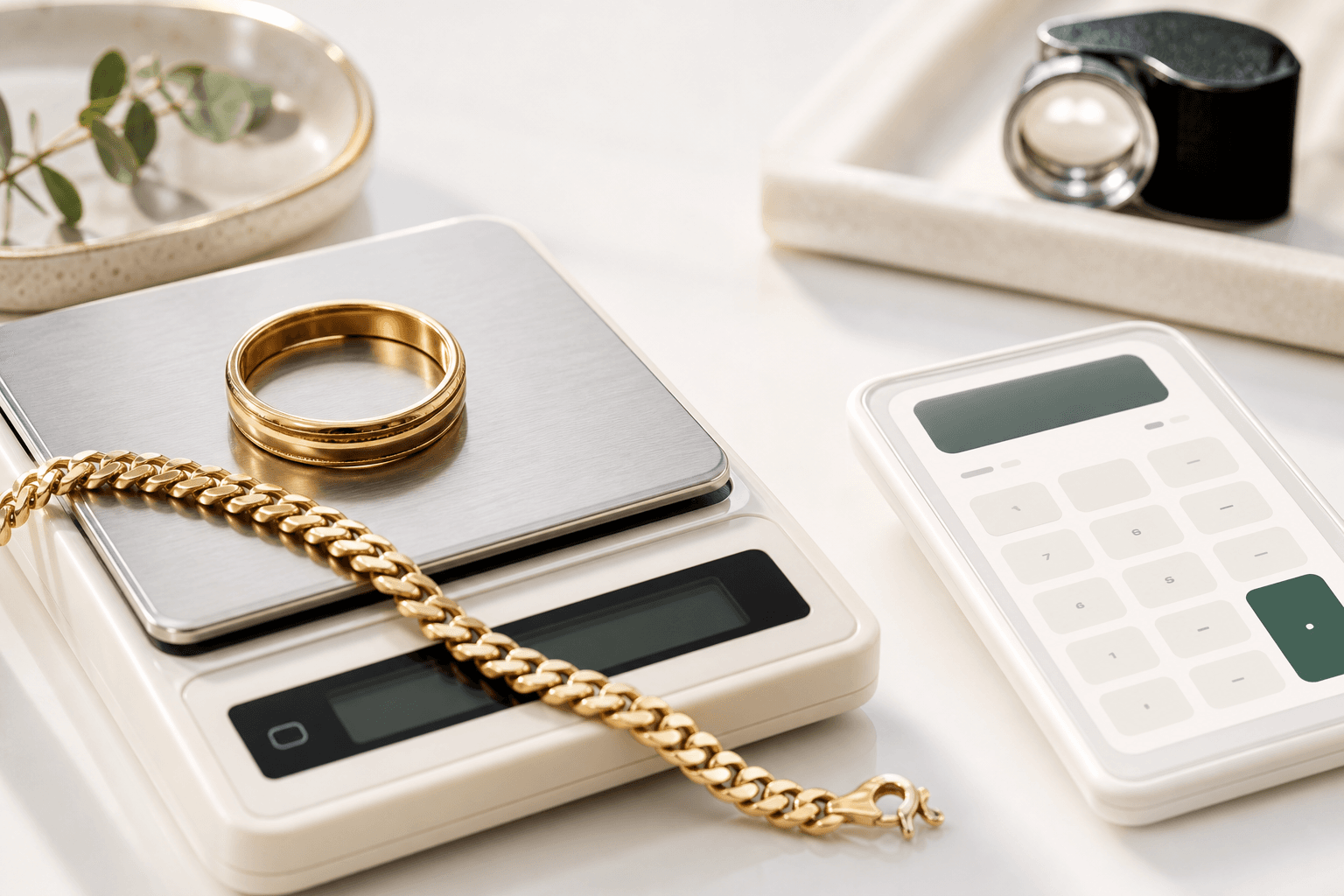
Silver spot price is quoted per troy ounce (31.1035g). For sterling: weight × 0.925 × (spot ÷ 31.1035) = per-gram melt. Worked example: at $30/oz silver, a 12-piece sterling place setting at 800g total weight is worth 800 × ($30 ÷ 31.1035) × 0.925 ≈ $714 in melt content. Our honest offer on flatware runs 70–85% of melt — typically $500–$607 — with a recognized-maker premium for full sets from Tiffany, Gorham, Reed & Barton, Towle, International, Wallace, or Lunt. Single pieces and partial sets price by the same per-gram math without the set premium.
Full sets, makers' marks, hollow handles — what changes the offer
A complete 12-person sterling service in a recognized pattern is worth more per ounce than the same weight in random pieces — full sets resell whole rather than getting melted. We pay a set premium for recognized patterns (Repoussé, King Richard, Chantilly, Francis I, English Provincial). Many sterling knives have hollow handles with stainless blades; we weigh the sterling content separately so you're not paying for stainless. Monogrammed pieces don't change the silver content but can reduce resale demand — for generic monograms we pay scrap weight, for historical or recognizable engravings we sometimes pay above scrap.
Selling Silver in San Diego: Sterling, Coins, Flatware, and Scrap FAQ
How do I tell if my flatware is sterling silver or silver-plated?
Sterling is stamped 'sterling' or '925' somewhere on each piece, usually on the back of the handle. Silver-plated is stamped 'EPNS' (electroplated nickel silver), 'EP', '90', '100', or sometimes nothing. If you can't find a stamp, bring it in — an acid test or XRF reader tells us in seconds whether the piece is solid silver or plated.
Do you buy single pieces or only complete sets?
Both. A single sterling fork has the same per-gram value as a piece in a complete set; we just add a set-completeness premium when applicable. Sell two pieces or two hundred — same per-gram math.
What about monogrammed sterling pieces?
Monograms don't change the silver content, but they reduce resale demand for the piece whole. For generic monograms (random initials) we pay scrap weight. For pieces with historical or recognizable engravings (institutions, well-known families, period inscriptions), we sometimes pay above scrap.
Do you buy US silver coins (pre-1965 dimes, quarters, half dollars)?
Yes — every denomination. Pre-1965 US silver dimes, quarters, half dollars, and Morgan/Peace silver dollars are 90% silver (coin silver). We pay for the silver content per coin (a pre-1965 quarter contains ~5.6g of silver). Junk-silver lots sell at slightly tighter margins than scrap flatware because the coin content is standardized.
What about modern silver bullion — Eagles, rounds, bars?
We pay close to spot for recognized bullion (American Silver Eagles, Canadian Maple Leafs, PAMP/Credit Suisse silver bars) — typically 92–98% of spot. The exact percentage depends on coin type and current market premium. Generic rounds price closer to scrap silver math.